Early Signs of Tree Decay You Should Never Ignore
Introduction
Trees can live for decades or even centuries, but over time they may begin to suffer from structural decline. Tree decay is one of the most common issues affecting mature trees, and it can significantly weaken their structure if left unchecked.
Decay often begins internally and may not be immediately obvious. However, there are several early warning signs that property owners, land managers, and developers should never ignore.
Understanding how tree decay develops, recognising early symptoms, and knowing when professional inspection is required can help prevent safety risks while protecting valuable trees.
What Is a Tree Decay?
Tree decay occurs when fungi break down the structural components of wood inside a tree. These fungi feed on cellulose and lignin, gradually weakening the wood and reducing its structural integrity.
This process is natural in woodland environments where trees eventually die and decompose. However, in gardens, public spaces, or development sites, advanced decay can create safety concerns.
Decay can develop due to:
- Physical damage to the trunk or roots
- Poor pruning practices
- Storm damage
- Soil compaction
- Environmental stress
- Age related decline
Because decay often begins internally, a tree may appear healthy on the outside while structural weakness develops within the trunk or root system.
Early Signs of Tree Decay
Recognising the early indicators of tree decay allows problems to be investigated before structural failure occurs.
Below are several warning signs that may suggest internal decay.
Fungal Growth on the Trunk or Roots
The presence of fungi is often one of the clearest indicators of decay within a tree.
Fungal fruiting bodies growing from the trunk, roots, or base of the tree may suggest that decay fungi are already active inside the wood.
Common examples include bracket fungi or mushrooms appearing on the bark or surrounding soil.
These fungi often appear after decay has already progressed internally.
Cavities and Hollow Sections
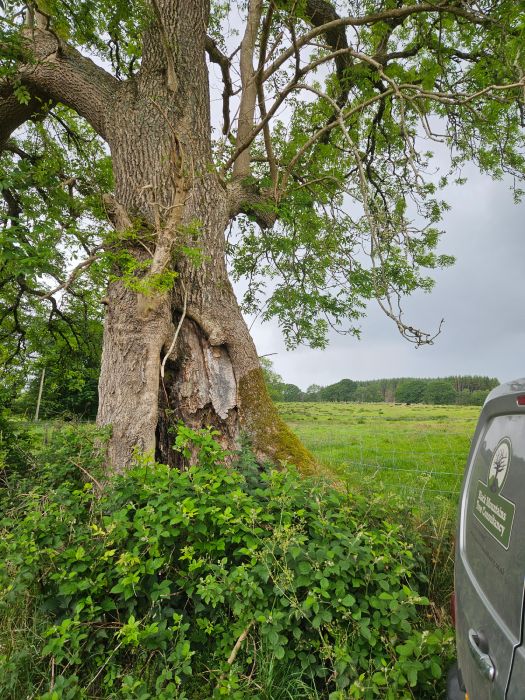
Visible cavities in the trunk or large branches may indicate advanced internal decay.
While some trees can tolerate small hollow areas, larger cavities can reduce structural stability, particularly in trees growing near buildings, roads, or footpaths.
An arboricultural inspection can help determine whether the tree remains safe or requires management.
Cracks or Splits in the Trunk
Long vertical cracks or structural splits can be a warning sign that internal wood strength has been compromised.
These defects may develop when decayed wood is unable to withstand environmental stress such as wind loading.
Structural cracks should always be inspected by a professional arboricultural consultant.
Dead or Dying Branches
Large sections of deadwood within the canopy may indicate declining tree health.
While occasional dead branches are common, widespread dieback across the canopy can sometimes signal underlying problems such as root damage or internal decay.
Dead branches can also pose a risk of falling, particularly during storms.
Unusual Leaf Growth or Sparse Canopy
A sudden reduction in leaf density may indicate stress within the tree.
Trees affected by internal decay may struggle to transport water and nutrients effectively, leading to reduced canopy growth.
Changes in leaf size, colour, or seasonal performance can also indicate underlying issues.
Causes of Tree Decay
Several environmental and physical factors can increase the likelihood of tree decay.
Mechanical damage from vehicles, construction activity, or landscaping equipment can expose internal wood to fungal spores.
Even relatively small wounds may allow decay organisms to enter the tree.
Incorrect pruning techniques can leave large open wounds that take longer to seal.
Professional pruning practices help minimise the risk of decay developing after tree work.
Heavy machinery or repeated foot traffic around tree roots can compact soil and reduce oxygen availability.
This can weaken tree health and make trees more vulnerable to decay.
Construction activity that damages roots may reduce tree stability and increase susceptibility to fungal infection.
Proper planning during development can help protect root systems.
Tree Decay Prevention
Although tree decay cannot always be avoided, several management practices can reduce the likelihood of serious problems developing.
Regular Tree Inspections
Periodic inspections help identify early signs of decay before structural problems become severe.
Trees located near buildings, roads, or public spaces benefit from routine safety checks.
Careful Pruning
Pruning should follow recognised arboricultural standards to minimise unnecessary damage to tree tissue.
Proper pruning helps trees recover more effectively and reduces infection risk.
Protecting Roots
Maintaining healthy soil conditions around trees is essential.
Avoiding soil compaction and preventing root disturbance during landscaping or construction helps maintain tree health.
Monitoring Mature Trees
Older trees naturally become more vulnerable to decay.
Monitoring their condition helps ensure they remain safe while preserving their environmental value.
Tree Decay Treatment Options
Monitoring and Risk Assessment
Some trees with minor decay can be safely retained and monitored over time.
A professional inspection can determine whether the tree remains structurally sound.
Targeted Pruning
Removing weakened or dead branches may reduce the risk of failure. Pruning may also reduce weight loading on compromised parts of the tree.
Structural Support
In certain cases, tree bracing or other support systems may help stabilise valuable trees with structural weaknesses.
Removal in Severe Cases
Where decay has significantly compromised structural stability, removal may sometimes be the safest option, particularly in high risk locations.
The appropriate response to tree decay depends on its location, extent, and the importance of the tree.
When Professional Advice Is Needed
Because tree decay often develops internally, professional assessment is often required to determine the true condition of the tree. Arboricultural consultants may use specialist tools and experience to identify structural weaknesses that are not visible externally. A professional Decay Investigation can assess internal wood conditions and help determine appropriate management options.
Where general health or stability concerns exist, a Tree Assessment or Tree Safety Inspection may also be recommended.
For larger landscapes or rural sites, ongoing monitoring through Woodland Management can help maintain healthy tree populations.
Wrapping Up
Tree decay is a natural process, but when it affects trees in gardens, public areas, or development sites, it can create safety concerns if left unmanaged.
Recognising early warning signs such as fungal growth, cavities, cracks, and canopy decline allows problems to be investigated before structural failure occurs.
Regular inspections and appropriate arboricultural management can help preserve trees while reducing risk.
If you are concerned about potential tree decay or the safety of trees on your property, contact BM Tree Consultancy for independent arboricultural advice and professional inspection.
Frequently Asked Questions
What causes tree decay?
Tree decay is mainly caused by fungi that break down wood inside the tree. These fungi enter through wounds, damaged roots, or pruning cuts and gradually weaken the structural integrity of the trunk or branches over time.
How can you tell if a tree is decaying?
Common signs include fungal growth on the trunk, hollow cavities, large cracks, dead branches, and thinning canopy growth. These symptoms may indicate internal wood decay and should be inspected by a qualified arboricultural consultant.
Can a tree recover from decay?
Trees cannot fully reverse decay once it develops, but proper management can slow its progression. Monitoring, pruning, and structural support may help retain trees safely when decay is limited and structural stability remains adequate.
Is tree decay dangerous?
Tree decay can become dangerous when it weakens the trunk or root system. Severely decayed trees may be more likely to fail during storms or strong winds, especially if they are located near buildings, roads, or public areas.
How do professionals inspect tree decay?
Arboricultural consultants inspect decay using visual assessment and specialist tools that help detect internal wood conditions. These investigations help determine the severity of decay and whether the tree remains structurally safe.
When should a tree with decay be removed?
Tree removal may be recommended when decay significantly compromises structural stability and creates a safety risk. The decision is usually based on professional assessment considering tree condition, location, and potential hazards.