

bmtreeconsultancy

Soil Analysis

Precision soil care tailored to your site and trees

Healthy trees start with healthy soil. Over time, soils can become compacted, depleted of nutrients, or imbalanced in their microbial communities making it harder for roots to access the air, water, and nutrients they need. Soil amelioration is the process of improving soil structure, fertility, and biological health to restore optimal growing conditions.

By enhancing the soil environment, we give trees the foundation they need to thrive improving resilience to pests, diseases, and environmental stress while promoting vigorous growth and longevity. Every treatment we provide is based on a detailed soil assessment to ensure it is tailored to your site’s conditions, the tree species present, and your specific objectives.

Soil care for healthy tree growth
Soil Amelioration Process

What Is Soil Amelioration?

Soil amelioration refers to the process of improving soil structure, composition and biological health. Whether in urban developments, parks and gardens or heritage landscapes, tree roots often struggle with compacted, degraded, or poorly oxygenated soils. Left unaddressed, this can lead to poor growth, dieback and decline, or even tree death. We use integrated and ecologically conscious methods to correct these issues and restore healthy soil function.

Our Soil Improvement Techniques Include:

  • Tree Roots

    Airspading & Decompaction

    Compacted soil can suffocate roots and restrict water and nutrient uptake. Using compressed air, we gently loosen the soil without damaging roots, bark, or underground utilities. This creates healthier pore spaces in the soil, allowing roots to breathe and expand naturally.

  • Mulching Png

    Radial Trenching & Vertical Mulching

    We create decompacted channels or pits in a radial pattern from the base of the tree and backfill them with nutrient-rich material. This targeted approach encourages root regrowth into improved soil conditions, boosting vitality and nutrient availability.

  • Growing Seeds

    Biochar Application

    We incorporate high-quality biochar into the soil to enhance structure, increase nutrient and moisture retention, and create a lasting habitat for beneficial soil microbes. Biochar is stable for decades, offering long-term improvements to soil health.

  • Mulching Png

    Mulching

    A protective layer of organic mulch is applied to conserve soil moisture, regulate temperature, and reduce weed competition. As it naturally breaks down, it adds organic matter that nourishes the soil ecosystem.

  • Shovel icon for planting and ground work

    Compost & Organic
    Matter Integration

    We blend well-matured compost and organic matter into the soil to boost fertility and encourage a thriving population of beneficial fungi and bacteria key allies in supporting healthy root systems.

  • Liquid drop tree care icon

    Compost Tea
    Production & Application

    We brew biologically active liquid composts rich in beneficial microorganisms, then apply them directly to the soil. This rapidly inoculates the root zone with organisms that improve nutrient cycling and protect against soil-borne diseases.

  • Fungi tree health icon

    Surface Dressing &
    Mycorrhizal Inoculation

    Specialist mycorrhizal fungi are introduced to promote healthier, more extensive root systems. These fungi form symbiotic relationships with roots, increasing nutrient and water absorption while improving tree resilience.

Each treatment is chosen based on a detailed soil assessment, ensuring it suits the site’s conditions, species present, and client goals.

Who Is This For?

Our soil improvement services are suitable for:

Whether you’re managing mature trees or alleviating construction related impacts, healthy soil is non-negotiable.

Why Choose Black Mountains?

We bring together technical knowledge and hands-on experience to get to the root of the problem and fix it, sustainably.

Give Your Trees the Ground They Deserve

Unhealthy soil often means unhealthy trees. Our ground amelioration services help build resilience, longevity and strong ecological value beneath the surface.

Let’s make your soil work smarter and your trees grow stronger.

FAQ: Soil Improvement & Amelioration

What is soil analysis and why is it important for trees?
Soil analysis is the process of assessing the physical, chemical and biological properties of the soil to understand how well it can support healthy tree growth. The condition of the soil directly influences root development, water availability, nutrient uptake and long-term tree stability. Poor soil quality can lead to reduced growth, increased susceptibility to pests and diseases, and premature decline. By understanding the characteristics of the soil, informed decisions can be made about tree selection, planting, management and construction, helping trees establish successfully and thrive for many years.
Soil analysis is beneficial whenever you are planning to plant new trees, investigate poor tree health or assess land before development. It is also valuable where trees appear to be declining without an obvious cause, following changes to drainage or ground levels, or before major landscaping works. Developers often commission soil investigations during the planning stage to ensure proposed construction will not adversely affect existing trees or future planting schemes. Early analysis provides valuable information that can help avoid costly problems later in a project’s lifecycle.
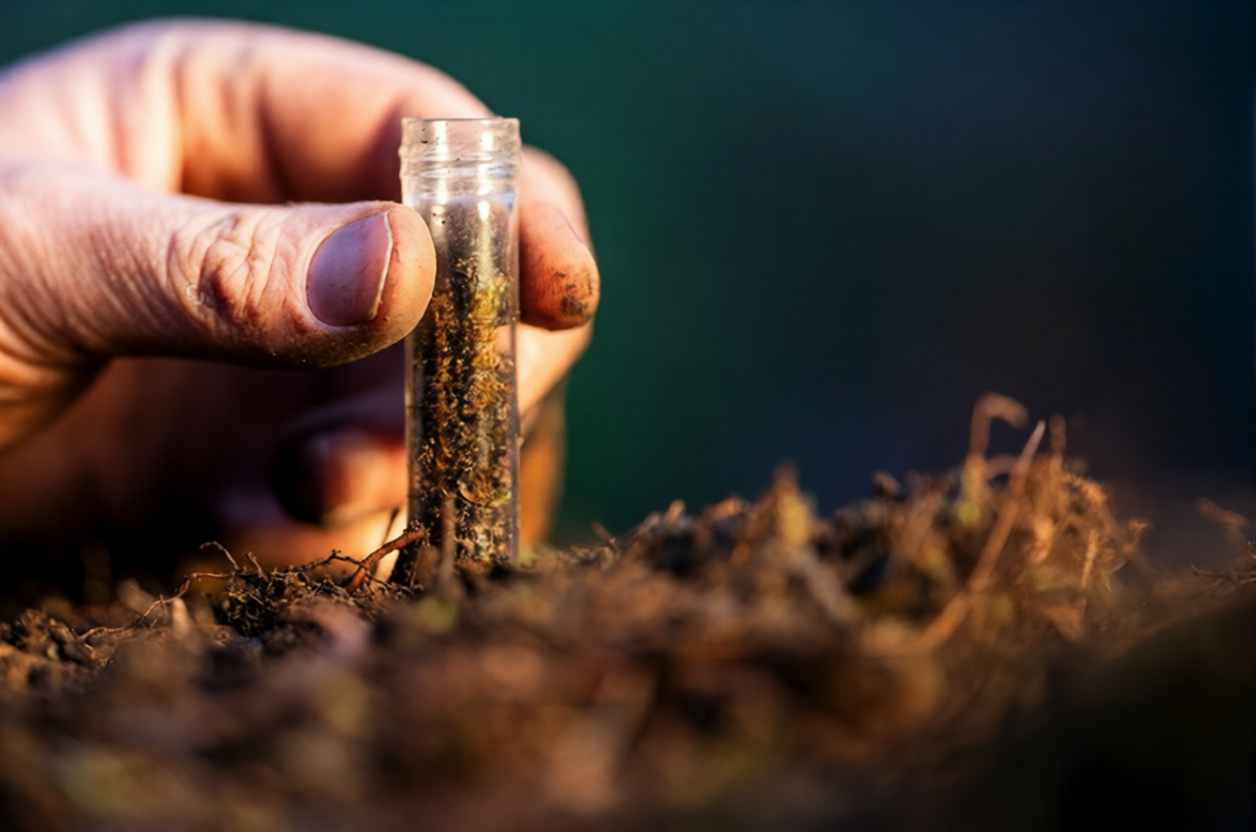
The process begins by collecting representative soil samples from the site, either by hand or using specialist sampling equipment. These samples may be analysed for factors such as soil texture, pH, nutrient availability, organic matter, drainage characteristics and compaction. Depending on the purpose of the assessment, additional testing may be carried out to investigate root development, contamination or moisture-holding capacity. The results are interpreted alongside the site’s existing vegetation, environmental conditions and intended land use to provide practical, site-specific recommendations.
Yes. Even well-established trees rely on healthy soil conditions throughout their lives. Compacted soils, poor drainage, nutrient deficiencies and restricted root zones can all reduce a tree’s ability to absorb water and essential nutrients. Over time, this may lead to slower growth, crown dieback, increased susceptibility to disease and reduced structural stability. Identifying soil-related problems early allows management strategies to be implemented before the tree’s health declines significantly.
Understanding soil conditions is an important part of responsible site design. Soil analysis helps identify areas of compaction, drainage issues and root-sensitive zones that could influence the layout of buildings, roads, utilities and landscaped areas. Combined with a BS5837 planning survey, soil information supports informed design decisions that protect existing trees while creating suitable conditions for future planting. This can reduce the likelihood of planning delays, tree loss and costly remedial works during construction.
Absolutely. Different tree species have different soil requirements, and planting the right tree in the right conditions greatly improves its chances of successful establishment. Soil analysis helps identify the most suitable species for a site, while also highlighting whether improvements such as organic matter, drainage enhancement or soil conditioning may be beneficial before planting begins. Investing in good soil preparation helps maximise the long-term health, resilience and lifespan of newly planted trees.
Many soil-related issues can be improved with appropriate management. Depending on the findings, recommendations may include reducing soil compaction, improving drainage, increasing organic matter, correcting nutrient deficiencies or modifying planting techniques. While not every soil issue can be completely resolved, targeted improvements can significantly enhance growing conditions and support healthier root development. Our recommendations are tailored to the site’s characteristics and the long-term objectives for the landscape.
Yes. Soil conditions often play an important role when investigating tree-related subsidence. Shrinkable clay soils, moisture availability and rooting conditions all influence how trees interact with nearby structures. Where appropriate, soil analysis can complement arboricultural assessments by providing additional information about the site’s characteristics. This evidence can be used alongside structural engineering and geotechnical investigations to build a more complete understanding of the factors contributing to ground movement.
Yes. Following the analysis, you’ll receive a clear, professionally prepared report explaining the findings and their implications. Rather than simply presenting laboratory data, we interpret the results within the context of your site, trees and objectives. The report includes practical recommendations to help improve soil conditions, support healthy tree growth or inform planning and development decisions. Our advice is written in straightforward language while remaining technically robust.
Black Mountains Tree Consultancy is based in Talgarth, near Brecon, and provides soil analysis services throughout Powys, Monmouthshire, Herefordshire and the surrounding areas of Wales, the West Midlands and South West England. Whether you’re investigating declining trees, preparing land for development or planning a new planting scheme, we provide evidence-based soil assessments that support informed arboricultural and landscape management decisions.