
Buying or selling a property can become more complicated when trees are growing close to the house. While mature trees can enhance a property’s appearance, provide shade and support wildlife, they can also raise questions about structural movement, root activity, safety and future maintenance.
If a mortgage lender, surveyor or insurer has raised concerns about nearby trees, you may be asked to obtain a tree mortgage report before your property transaction can proceed.
A tree mortgage report provides an independent arboricultural assessment of relevant trees, their condition and their potential relationship with the property. It helps lenders, buyers and property owners understand whether there are identifiable tree-related concerns and what further action, if any, may be appropriate.
However, the presence of trees near a building does not automatically mean the property is at risk.
This guide explains what a tree mortgage report is, why lenders request one, what an inspection involves, how tree-related risks are assessed and what homeowners can do to avoid unnecessary delays.

What Is a Tree Mortgage Report?
A tree mortgage report is a specialist arboricultural report prepared to address concerns about trees that may affect a property being purchased, sold, remortgaged or insured.
Mortgage lenders and building surveyors may request one when trees are situated close to a building, particularly where there are questions about potential foundation movement, root activity, structural damage or tree condition.
The report is generally prepared by a suitably qualified arboricultural consultant who assesses the relevant trees and provides professional findings and recommendations.
Depending on the circumstances, a tree mortgage report may consider:
- The species, approximate dimensions and condition of nearby trees.
- The distance between trees and the property.
- Potential interactions between tree roots, soil and foundations.
- Visible signs of tree defects or structural instability.
- The possible influence of trees on shrinkable clay soils.
- Existing evidence of movement or damage, where relevant.
- Appropriate tree management recommendations.
- Whether additional investigations are necessary.
The exact scope should reflect the lender’s requirements and the concerns identified during the property survey.
Importantly, a tree mortgage report is not the same as a structural engineer’s report. An arboricultural consultant assesses tree-related factors, while a structural engineer may be needed to investigate the building itself.
At Black Mountains Tree Consultancy, independent arboricultural advice helps property owners and buyers understand tree-related concerns and make informed decisions.
Why Is It Difficult to Give a Fixed BS5837 Survey Price?
A fixed online price can be misleading because two apparently similar planning applications may involve very different levels of work.
Consider two residential projects.
The first might involve a proposed extension with only a small number of relevant trees and clear site information. The second might involve several mature trees around the property, neighbouring trees close to the boundary and a design that interacts with their root protection areas.
Both are residential developments, but the arboricultural work involved may be significantly different.
An accurate quotation should therefore reflect the actual scope rather than simply the type of planning application.
What Information Helps When Requesting a Quote?
Providing good information at the outset makes it easier for an arboricultural consultant to understand the project and establish what is required.
Useful information can include:
- The site address
- A location or site plan
- A topographical survey, if available
- Existing and proposed layout drawings
- Details of the proposed development
- Any correspondence from the local planning authority relating to trees
- Planning application details, if an application has already been submitted
- Any previous tree reports relating to the site
It is also useful to explain the current stage of the project and whether the local planning authority has specifically requested arboricultural information.
Why Do Mortgage Lenders Request Tree Reports?
Mortgage lenders need to understand risks that could affect a property’s condition, value or suitability as security for a loan.
During a mortgage valuation or building survey, the surveyor may identify trees close to a house and recommend further investigation.
This does not necessarily mean the property has a structural problem. It may simply mean that the surveyor needs specialist advice before the lender can make a decision.
1. Trees growing close to buildings
A large tree near a property can raise questions about its root system and the potential interaction between roots, soil and foundations.
However, distance alone does not establish whether a tree presents a risk.
The significance of a nearby tree depends on several factors, including species, maturity, soil characteristics, foundation design and local ground conditions.
For example, a mature tree growing close to a house on shrinkable clay soil may require a different assessment from a similar tree growing near a property on less shrinkable ground.
2. Concerns about subsidence
Subsidence occurs when the ground supporting a building moves downwards, potentially causing the foundations to move.
On shrinkable clay soils, trees can contribute to seasonal soil moisture changes through water uptake. During dry periods, clay soils may shrink as they lose moisture.
Where foundations are susceptible to this movement, cracking or distortion can occur.
Nevertheless, not all cracks indicate subsidence, and not all subsidence is caused by trees.
A professional assessment is important before drawing conclusions about the cause of structural movement.
3. Visible structural damage
A lender may request additional information if a building survey identifies:
- Cracks in external brickwork.
- Distortion around windows or doors.
- Signs of historic building movement.
- Uneven ground close to foundations.
- Evidence of previous structural repairs.
An arboricultural assessment can help establish whether nearby trees warrant further consideration.
Where structural movement is suspected, a specialist tree subsidence survey may be appropriate alongside structural and geotechnical investigations.
4. Tree condition and safety
Sometimes the concern is not subsidence but the physical condition of a tree.
A mature tree with significant decay, damaged branches or structural defects may warrant closer inspection, particularly if it could affect a building.
A tree mortgage report may identify whether further investigation or management is advisable.
5. Insurance and future property maintenance
Insurers may also ask questions about trees close to a property, particularly where there is a history of movement or previous claims.
The information required by an insurer can differ from that requested by a mortgage lender.
It is therefore important to establish exactly what information is needed before commissioning a report.
When Is a Tree Mortgage Report Required?
There is no universal UK requirement for every property with nearby trees to have a tree mortgage report.
Whether one is needed depends on the individual circumstances, the lender’s instructions and any concerns identified during the mortgage valuation or property survey.
Buying a property
A buyer may need a report when the mortgage valuation highlights trees as a potential concern. The lender may require satisfactory specialist advice before proceeding.
Selling a property
A seller may choose to obtain arboricultural advice after a buyer’s survey raises concerns. This can help address questions during negotiations, although acceptance remains the buyer’s lender’s decision.
Remortgaging or reviewing property insurance
Existing owners may be asked for specialist information when remortgaging or addressing insurer concerns about trees, previous movement or potential structural risks.
A report can also be useful where a property owner wants independent advice before carrying out major tree work or investigating possible root-related damage.
What Does a Tree Mortgage Survey Involve?
A tree mortgage survey normally begins with a review of the concerns raised by the lender, surveyor or property owner.
The consultant then undertakes an appropriate assessment of the trees and their relationship with the property.
The following stages explain the typical process.
Step 1: Reviewing the lender’s requirements
Before visiting the property, the arboricultural consultant should understand why the report has been requested.
Useful documents may include the mortgage valuation, building survey, lender’s written instructions and any relevant information about historic structural movement.
This is important because different lenders and surveyors may ask for different levels of detail.
For example, a general concern about a mature tree near a house may require a different scope of investigation from a property showing signs of possible subsidence.
Step 2: Inspecting the relevant trees
The consultant visits the property to assess the trees identified as relevant to the mortgage enquiry.
The inspection may record:
- Tree species and approximate maturity.
- Height and stem diameter.
- Crown dimensions and general form.
- Physiological condition and visible defects.
- Approximate position relative to buildings.
- Evidence of previous pruning or management.
- Relevant surrounding site conditions.
The assessment is generally visual unless more detailed investigations are justified and agreed.
Step 3: Assessing the relationship between trees and buildings
The consultant considers how the trees may interact with the property and its surroundings.
This includes reviewing factors such as tree size, species characteristics, distance from buildings, soil conditions and any visible signs of damage.
Where shrinkable clay soils are present, the potential influence of tree water uptake may be particularly relevant.
However, the presence of a tree within a particular distance does not, by itself, establish that the tree is causing damage.
Step 4: Identifying whether further investigations are needed
A visual arboricultural assessment cannot determine every aspect of a property’s foundations, underground roots or soil behaviour.
Depending on the circumstances, further work might include:
- Soil investigation or laboratory testing.
- Structural engineering assessment.
- Monitoring of building movement.
- Foundation investigations.
- Specialist root identification.
- More detailed tree condition investigations.
These investigations are not necessary for every property.
A proportionate approach helps avoid unnecessary work while ensuring that significant concerns are properly examined.
Step 5: Preparing the written report
The arboricultural consultant prepares a report explaining the findings and their implications.
A useful report should distinguish between observed conditions, professional assessments and matters that require further investigation.
It may recommend tree management, monitoring or additional specialist advice.
The report can then be provided to the lender, surveyor or other relevant party for consideration.
The final decision on mortgage lending remains with the lender. An arboricultural consultant cannot guarantee that a particular report will satisfy every lender or result in mortgage approval.
What Information Is Included in a Tree Mortgage Report?
The content of a tree mortgage report depends on the purpose of the assessment and the requirements of the commissioning party.
A typical report may include the following information.
Report section | What it explains |
Property details | Site address and scope of the assessment |
Tree information | Species, approximate dimensions, location and condition |
Site observations | Relevant features of the property and surrounding ground |
Tree-related assessment | Potential concerns relating to roots, soil movement or tree condition |
Limitations | Matters that could not be confirmed through the inspection |
Recommendations | Appropriate management or further investigation |
Supporting information | Photographs, plans or other relevant records where needed |
A professional report should explain the findings in clear language rather than simply describing the trees.
For mortgage purposes, the key question is usually whether the identified tree-related concerns have been adequately assessed and what action, if any, is justified.
Can Trees Cause Subsidence?
Yes. Trees can contribute to subsidence in certain circumstances, particularly where buildings are founded on shrinkable clay soils.
However, the relationship between trees and subsidence is more complicated than simply having a large tree close to a house.
How tree roots influence soil moisture
Trees absorb water from the ground through their root systems.
On clay soils that shrink and swell significantly with moisture changes, this process can influence ground volume.
During prolonged dry weather, water loss may cause shrinkable clay to contract.
Where foundations are vulnerable to this movement, the building may experience differential settlement and cracking.
The extent of any influence depends on factors including:
- Soil type and shrinkage potential.
- Tree species and water demand.
- Tree maturity and growth.
- Root distribution.
- Seasonal weather conditions.
- Foundation depth and design.
- Existing site conditions.
The actual root system cannot be reliably determined from crown size alone.
Are all trees a subsidence risk?
No
Many trees grow close to buildings without causing structural damage.
The presence of a tree does not demonstrate that it is responsible for cracking, and the absence of a nearby tree does not rule out other causes of movement.
A professional assessment considers the available evidence rather than assuming that every tree near a property is problematic.
Can removing a tree solve subsidence?
Not necessarily
Tree removal can reduce future water uptake, but it does not automatically repair existing foundation damage or establish the cause of movement.
On some shrinkable clay sites, the removal of a mature tree can contribute to soil rehydration and swelling. This may create a risk of ground heave, particularly where soils have been significantly dried over time.
Tree removal should therefore not be treated as an automatic solution.
Where significant structural movement is suspected, decisions should be informed by appropriate arboricultural, structural and geotechnical advice.
Which Trees Are Most Likely to Raise Mortgage Concerns?
Different tree species have different growth characteristics, potential mature sizes and water demands.
Some species may warrant closer consideration on shrinkable clay soils, but no species can be classified as a subsidence risk without considering its site conditions.
Examples of trees that may be relevant to mortgage assessments include:
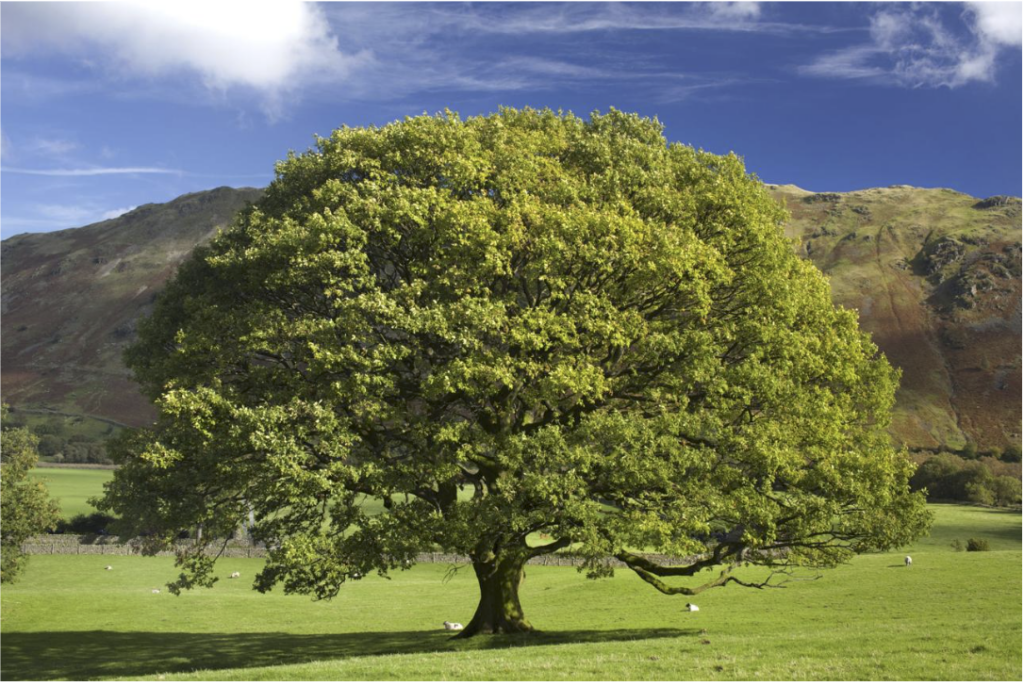
Oak
Oaks can develop substantial crowns and root systems over time. Their maturity, position and relationship with soil and foundations are important considerations.
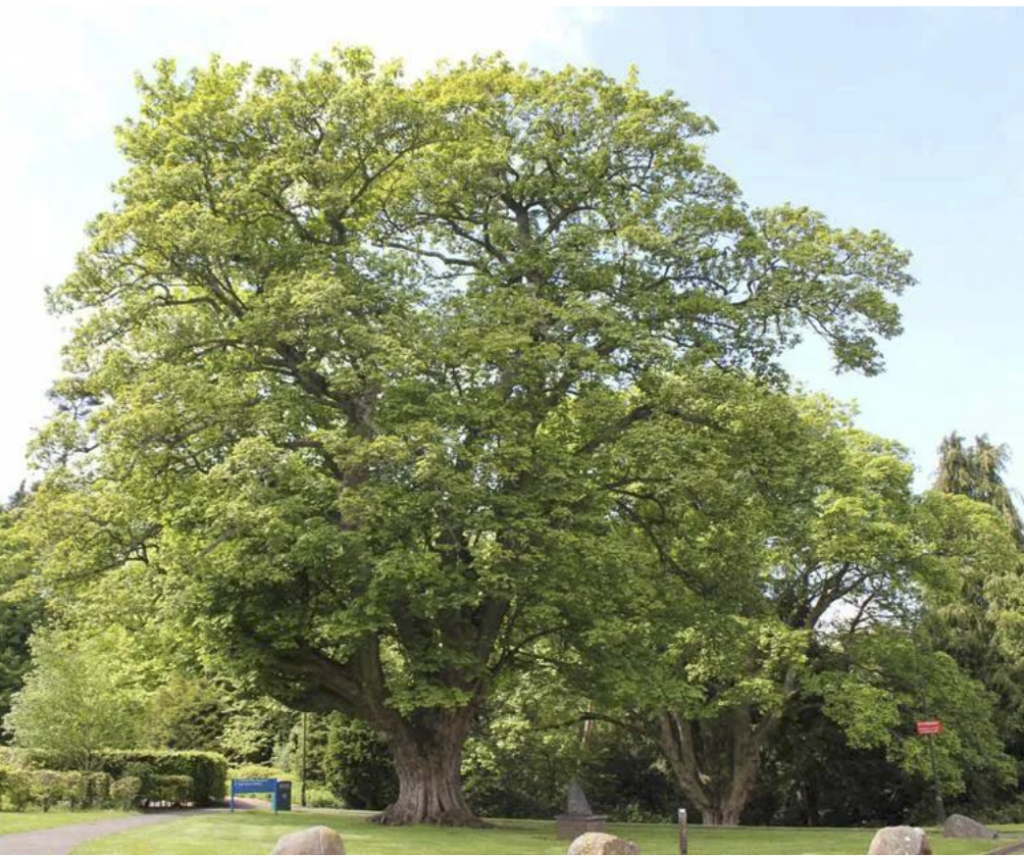
Sycamore
Mature sycamores can develop broad crowns and extensive root systems. Their relationship with nearby buildings should be assessed in context.
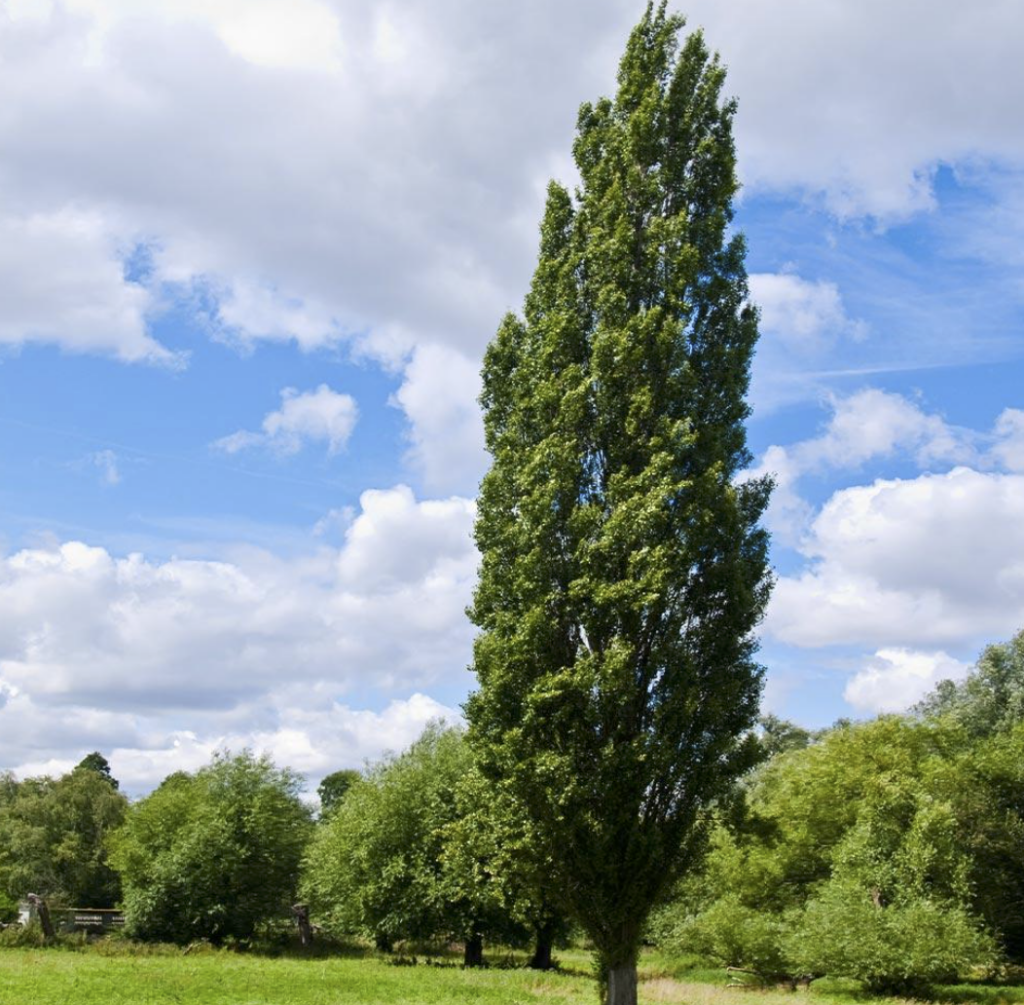
Poplar
Some poplars are fast-growing and can become very large. Their species, size and site conditions may be relevant where shrinkable soils are present.
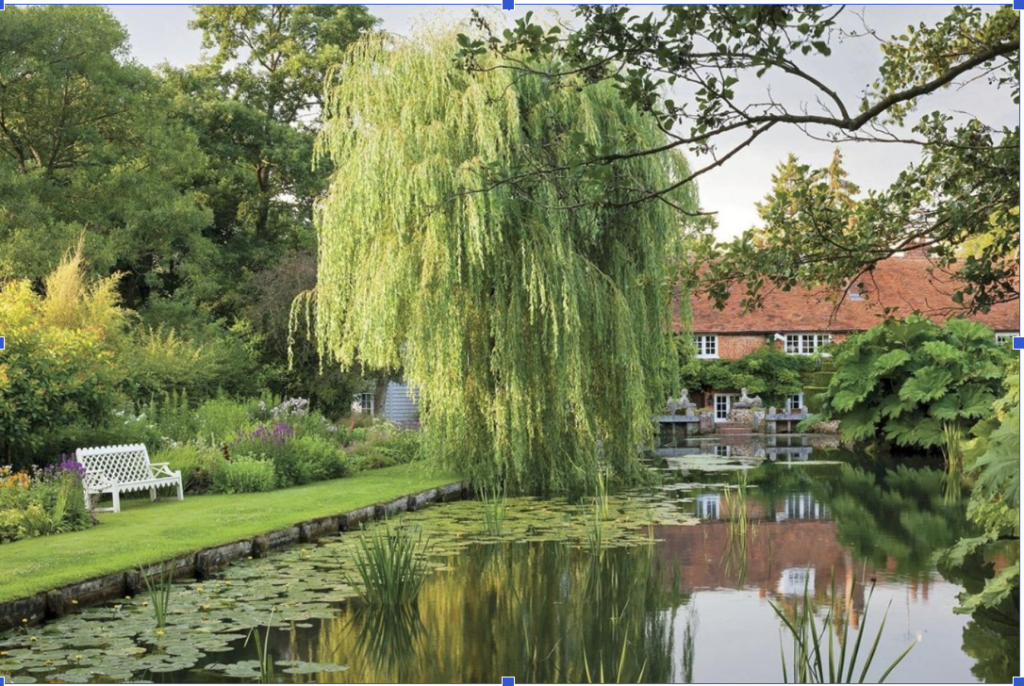
Willow
Willows are often associated with relatively high water demand and vigorous growth. Site moisture conditions and proximity to structures require appropriate consideration.
Other species, including ash, lime, beech and conifers, may also require assessment depending on the property and the reason for the lender’s enquiry.
It is important not to assume that smaller trees are always harmless or that larger trees must be removed.
How Close Can a Tree Be to a House Before It Becomes a Problem?
A tree mortgage report can influence how a lender evaluates concerns identified during a property valuation.
However, the outcome depends on the findings and the lender’s own criteria.
There are several possible outcomes.There is no single distance that makes a tree safe or unsafe in relation to a building.
A tree growing five metres from a property does not necessarily present a greater risk than one growing ten metres away. The answer depends on the tree, the soil, the foundations and the wider site conditions.
Guidance such as BS 5837:2012, which addresses trees in relation to design, demolition and construction, and NHBC Standards Chapter 4.2, which considers building near trees on shrinkable soils, can be relevant in their respective contexts.
However, these documents serve different purposes and should not be treated as universal rules for diagnosing subsidence in existing buildings.
A tree mortgage assessment must consider the specific property rather than relying on a simple distance chart.
How Much Does a Tree Mortgage Report Cost in the UK?
The cost of a tree mortgage report varies depending on the nature and complexity of the assessment.
There is no single standard price that applies to every property.
Factors affecting the fee may include:
- The number of trees requiring assessment.
- The size and accessibility of the site.
- The location of the property.
- The level of detail required by the lender.
- Whether historic movement or structural damage is involved.
- The availability of relevant site and building information.
- Whether additional investigations are required.
A straightforward assessment of a small number of trees may require less work than an investigation involving multiple mature trees, suspected subsidence or complicated site conditions.
Additional services, such as soil testing or structural engineering investigations, may involve separate fees.
Before commissioning a report, request a clear quotation and confirm that the proposed scope addresses the lender’s requirements.
This can help reduce the likelihood of paying for an assessment that does not answer the questions raised during the mortgage process.
Will a Tree Mortgage Report Affect My Mortgage Application?
No significant concerns identified
The report may find that the relevant trees do not present identifiable concerns requiring further action within the scope of the assessment.
The lender can then consider the findings as part of its mortgage decision.
Tree management recommended
The consultant may identify work that would be appropriate to address a particular concern.
This could include further inspection, management of defective branches or other proportionate measures.
Any proposed work should be supported by the assessment rather than undertaken simply because a tree is close to a building.
Further investigations required
Where the available evidence is insufficient, the consultant may recommend additional specialist investigation.
For example, suspected structural movement may require a structural engineer, while questions about soil shrinkage may require geotechnical information.
The lender requests additional information
Even after receiving an arboricultural report, a lender may ask further questions or impose conditions.
This is why it is important to establish the lender’s requirements before the inspection takes place.
What If a Tree Is Protected by a Tree Preservation Order?
A Tree Preservation Order, commonly known as a TPO, can restrict works to a protected tree.
In England and Wales, protected tree work will generally require the relevant local planning authority’s consent unless a statutory exception applies.
Trees within conservation areas may also be subject to separate notification requirements, depending on the circumstances.
A mortgage lender requesting a tree report does not automatically give a property owner permission to prune or remove a protected tree.
Similarly, a recommendation in an arboricultural report does not override the relevant legal controls.
Before carrying out work, the tree’s protection status should be checked with the appropriate local planning authority.
If a tree is protected, specialist Tree Preservation Order advice can help property owners understand the applicable process and the options available.
This is particularly important where a proposed management recommendation could affect the tree’s long-term condition or amenity value.
Tree Mortgage Report vs Tree Survey: What's the Difference?
The terms tree survey, tree mortgage report and tree risk assessment are sometimes used interchangeably, but they can refer to different types of work.
Assessment | Main purpose |
Tree mortgage report | Addresses tree-related concerns raised during property lending, purchase or remortgaging |
Tree safety inspection | Assesses tree condition and relevant risks to people or property |
Tree subsidence survey | Investigates the potential relationship between trees, soil moisture and building movement |
BS 5837 tree survey | Provides tree information to inform development and planning decisions |
General tree assessment | Evaluates tree condition or other specified arboricultural concerns |
A mortgage report may incorporate elements of a general tree assessment or safety inspection, but its scope should be tailored to the lender’s questions.
If a tree has visible structural defects, a more detailed tree safety inspection may be advisable.
What Should Homebuyers Do If Their Mortgage Survey Flags a Tree?
Discovering a tree-related concern in a mortgage valuation can be unsettling, especially when a property purchase is progressing towards exchange of contracts.
However, the surveyor’s recommendation should be treated as a request for further information rather than proof that the property is unsuitable.
The following checklist can help buyers respond efficiently.
Homebuyer’s tree mortgage report checklist
0 of 7 completed
0%
Obtain the surveyor’s or lender’s written comments.
Confirm exactly what type of tree report is required.
Check whether the lender specifies any consultant qualifications or report format.
Arrange an assessment with a suitably qualified arboricultural consultant.
Provide relevant building surveys and historic damage information.
Review the report and any recommended further investigations.
Submit the report through the appropriate lender or mortgage adviser channel.
When Should You Seek Professional Arboricultural Advice?
Professional advice is particularly useful when a tree-related issue could affect a property transaction, building condition or future management decision.
Consider consulting a qualified arboricultural specialist when:
- A lender or building surveyor requests a tree mortgage report.
- A property has mature trees close to its foundations.
- Cracking or movement has raised questions about tree roots.
- A tree appears structurally defective or in poor condition.
- Tree removal or substantial pruning is being considered.
- A protected tree is involved in a property transaction.
- An insurer requests information about nearby trees.
An independent consultant can help identify what is known, what remains uncertain and whether additional investigations are proportionate.
This can be especially valuable where several parties, including the buyer, seller, lender, insurer and surveyor, are involved.
Why Choose an Independent Arboricultural Consultant?
A tree mortgage report should provide an objective assessment rather than a predetermined recommendation for tree removal or remedial work.
An independent arboricultural consultant can evaluate the relevant evidence and explain the practical options.
Black Mountains Tree Consultancy is led by Johann Wilsker, who has over 20 years of arboricultural experience.
The consultancy provides independent tree surveys and advice for homeowners, landowners, developers, architects and organisations across Wales, the West Midlands, South West England and suitable projects elsewhere in the UK.
The emphasis is on practical, evidence-led recommendations that help clients understand their trees and make informed decisions.
Whether the concern relates to tree condition, possible subsidence or lender requirements, the aim is to establish an appropriate scope of assessment and provide clear professional advice.
Conclusion: A Tree Mortgage Report Can Help You Make an Informed Property Decision
A tree mortgage report can play an important role when nearby trees raise questions during a property purchase, sale or remortgage.
It provides specialist arboricultural information that can help lenders and property owners understand potential concerns and determine whether further action is appropriate.
The most important point is that trees near a house do not automatically mean that the property is unsafe, affected by subsidence or unsuitable for a mortgage.
Tree-related concerns should be assessed individually, taking account of the species, site conditions, soil characteristics, building information and available evidence.
Where professional advice is needed, an independent assessment can help avoid unnecessary tree work, identify genuine concerns and support informed decisions.
If you have been asked to obtain a tree mortgage report, contact Black Mountains Tree Consultancy to discuss the property, the lender’s requirements and the most appropriate next steps.
Frequently Asked Questions About Tree Mortgage Reports
Do I need a tree mortgage report to buy a house?
Not every property purchase requires a tree mortgage report. A lender or surveyor may request one if nearby trees raise concerns about the building, ground conditions or tree safety. The requirement depends on the particular property and the lender’s instructions.
How much does a tree mortgage report cost?
Costs vary according to the number of trees, site location, complexity of the assessment and level of reporting required. Additional investigations, such as soil testing or structural engineering assessments, may involve separate costs. A tailored quotation is the most reliable way to establish the fee.
Can a mortgage be refused because of trees?
A lender may decline or place conditions on a mortgage application where it considers tree-related concerns unresolved or the property unsuitable under its lending criteria. However, the presence of trees alone does not mean a mortgage will be refused. Specialist evidence may help the lender assess the situation.
How long is a tree mortgage report valid?
There is no universal expiry period for tree mortgage reports. Acceptance depends on the lender’s requirements and whether the report remains representative of the current site conditions. Significant tree growth, deterioration, storm damage or changes to the property may justify reassessment.
Do I need to cut down a tree to get a mortgage?
Not necessarily. Tree removal is not an automatic requirement simply because a tree grows close to a property. A professional assessment may find that no action is necessary, that proportionate management is appropriate or that further investigation is required. Any proposed removal should also account for tree protection and potential ground movement.
Who is qualified to prepare a tree mortgage report?
A tree mortgage report should be prepared by a suitably qualified and experienced arboricultural professional who is competent to assess the relevant tree-related concerns. Some lenders may specify qualifications, experience or report requirements, so these should be confirmed before commissioning the work.